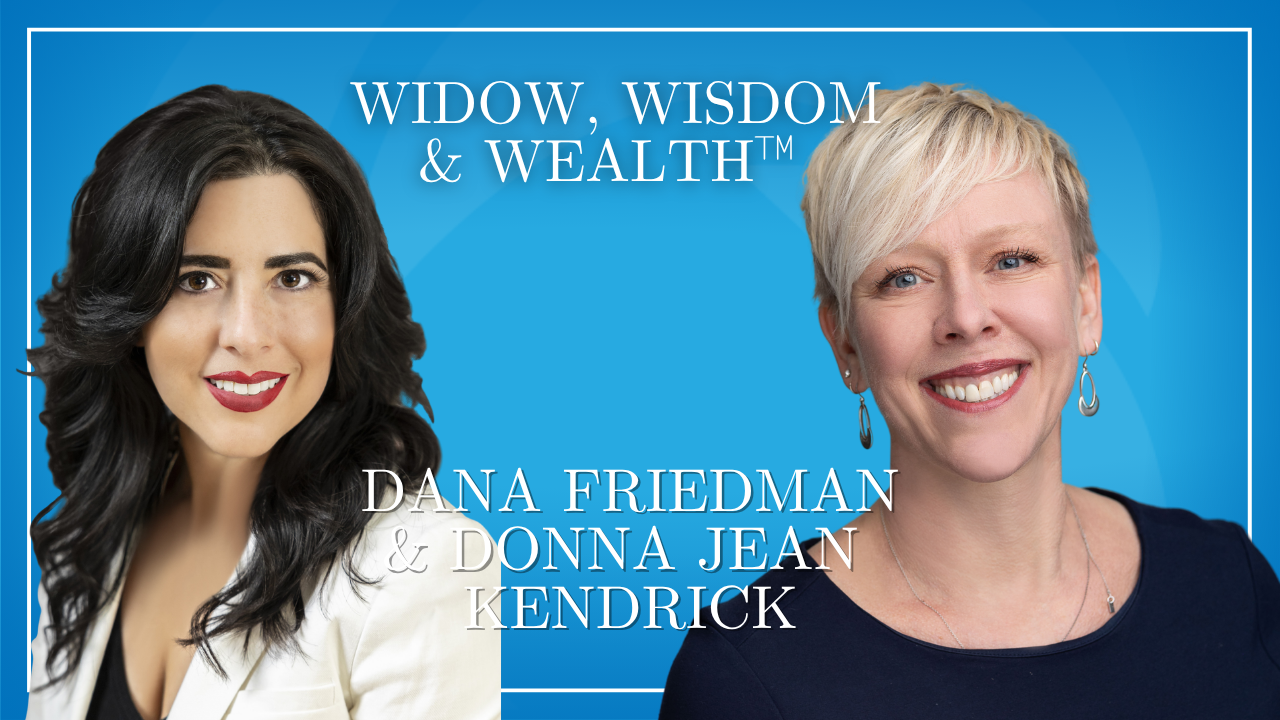
Small moments, shared experiences, and preserving the stories of someone you love. Inspired by Donna Jean Kendrick’s conversation with Dana Frost on Widow Wisdom and Wealth.
The word joy can feel complicated after losing a spouse.
You may want something to look forward to while wondering how you could possibly enjoy it. You may laugh at a familiar joke and feel the ache of the person missing from the conversation. Or you may be so occupied with getting through each day that joy feels like a word belonging to another part of your life.
When Dana Frost joined me on Widow Wisdom and Wealth, she talked about what it meant to look for small moments of joy during her husband’s terminal illness and after his death.
Dana is the founder of the Forced Joy Project. The name came from a conversation with her husband, Brad, during the 100 days between his diagnosis and his death.
They were having a terrible time. Dana wanted something in their days beyond what they were facing. When she said they needed to find a way to experience joy, Brad asked whether she wanted them to force it.
She said yes.
What followed was a practice of paying attention to small moments: an inside joke, a conversation, a little connection they could share.
Finding joy after losing a spouse may begin just as quietly. It can involve noticing an ordinary moment you enjoy, connecting with people who understand your experience, or finding a way to remember your spouse through stories. The pace and form will be personal. Dana’s story offers possibilities to consider, rather than an expectation about how you should feel.
How the Forced Joy Project Began
Dana had already experienced her own cancer diagnosis and treatment at age 28. Five years later, Brad received a terminal cancer diagnosis.
At first, they hoped they would beat the odds. As he grew sicker, however, the experience became harder to navigate. Dana described wanting something else to focus on alongside the fear and pain of what was happening.
Their decision to look for joy gave them a reason to notice the conversations and jokes they could still share. Those moments became meaningful to her, even as the circumstances remained devastating.
After Brad died, Dana continued the practice. She described it as a way to honor herself and the experience she and Brad had begun together.
She did not initially imagine it becoming a business. Over time, her writing and conversations grew into a community, and then into opportunities for people to connect online and in person.
I appreciated how clearly she described the limits of those small moments. They did not remove what she and Brad were going through. They gave them something within the day that they could still share.
For someone who is grieving, that distinction matters. An enjoyable moment can have value even when the rest of the day remains difficult.
What Does Finding Joy in Grief Actually Look Like?
Dana’s examples were often small. In the early days, she and Brad looked for what she called tiny glimmers. Later, she described spending time outside, being near the lake, and tending a garden.
What brought her joy changed over the years.
That felt familiar to me. During our conversation, I joked that a cup of coffee, a piece of dark chocolate, and a quiet room can feel wonderful in a busy household.
Sometimes an ordinary experience is the one you have room for.
You might notice the warmth of a drink, a song you have always liked, a conversation with a friend, or the way your child tells a story. You may want to spend a little time somewhere familiar or try something different.
You can explore what feels comfortable without expecting a particular emotional result. A walk might be enjoyable one day and full of memories the next. You might laugh with someone and miss your spouse intensely afterward.
Dana’s experience made room for that complexity. Her practice was about looking for something meaningful within the life she was living, including days that were painful.
Perhaps a useful starting question is simply: Is there something small I would like to make room for today?
The Space Between Getting Through the Day and Knowing What Comes Next
One part of our conversation focused on the period when life has begun to feel less consumed by the immediate aftermath of loss, but the future is still unclear.
You may have learned new routines. Some paperwork may be handled. The people who came every day may have returned to their own lives.
And you may still be wondering what your life is going to look like.
Dana described this as part of the experience the Joy Scout Club supports. During the episode, she spoke about members exploring what they want, what brings them joy, and what their next steps might be.
Those questions can reach into ordinary life. How do you want to spend a weekend? Would you like to make new friends? Is there an interest you have not returned to? What would help you feel more connected to your community?
There may also be bigger decisions about work, moving, or relationships. You do not need answers to all of them at once.
The opportunity to talk with people who recognize the experience can make those questions easier to bring into the open. Someone else may be exploring a similar decision. Another person may be able to describe what they tried and what they learned.
You can listen, consider what fits, and leave the rest.
What Can a Widowhood Community Offer?
Dana spoke about the relief of spending time with people who understand something about partner loss before you explain it.
There can be room for a story, a difficult feeling, or even the kind of humor that makes other people uncertain how to respond.
I recognized that part. Sometimes, in a group with shared experience, a sarcastic remark about widowhood lands with understanding. People hear the experience behind the joke.
Dana also described how quickly people can connect over things beyond grief once that initial understanding is present.
They may talk about travel, a new job, parenting, dating, or what they want to do with their home. Their shared loss is one point of connection within a relationship that can grow to include many others.
During the episode, Dana mentioned group chats that continued after retreats. People stayed in contact through later milestones, celebrating changes in one another’s lives and offering support during difficulties.
For someone wondering whether a widowhood group would make loss their whole identity, that is a helpful picture. A community can give your experience room while also making room for the other parts of your life.
The right fit will depend on the people, format, and kind of participation you want.
What If a Grief Group Has Not Felt Right for You?
Dana was candid about attending a group early in her grief that did not feel like a good fit. At first, she took that as a reason to avoid grief groups altogether. Later, she recognized how much the groups could differ.
That is a useful distinction when you are deciding whether to try again.
You may prefer a structured discussion, an activity with other people, or a setting where you can listen before speaking. Online participation may feel easier to approach. You may want an in-person experience or a smaller gathering.
You can ask about those details before joining. What happens during a meeting? Is sharing optional? Who usually attends? How much time does it require? What does participation cost?
Dana told us about a retreat participant who arrived openly skeptical. She said she did not like people and was unsure why she had come. Dana appreciated the honesty.
In that person’s experience, the connections she made led her to attend other retreats afterward.
That is one person’s story, but it makes room for an important possibility: you can feel hesitant and still be curious about whether a setting might suit you.
You can also decide that it does not. Exploring a different format may be a reasonable next step when you want connection but have not found the right place for it yet.
What Are Widow Retreats Like?
In the episode, Dana described two kinds of in-person experiences.
Joy Scout Camp included a more facilitated setting, with time together in a house, conversations around a campfire, and opportunities to be outside and connect with one another.
She also discussed Widows in the Wild, an adventure-oriented travel offering she runs with a co-founder. Those experiences focused more on exploring a destination with people who share an understanding of widowhood.
Dana described laughter as a substantial part of these gatherings. There were also tears and difficult conversations. Participants did not have to limit themselves to one kind of experience.
She emphasized finding an itinerary that suits you. Some trips involved more activity; others focused more on sightseeing. The amount of travel, the physical demands, and the format all matter when considering whether an event would fit.
If you are interested, review the current event details directly with the organizer. Ask what is included, what participation involves, and what arrangements you would need to make at home.
A retreat also belongs within your practical planning. Consider the full cost, time away, and any childcare or caregiving arrangements required. You might prefer to begin with an online gathering or a shorter event.
Those choices give you ways to explore connection at a scale that fits your circumstances.
What Is Book of Stories?
One of my favorite parts of our conversation was learning about Book of Stories.
Dana clarified that it is a service for gathering memories from people who knew someone and creating a keepsake book from those contributions.
The idea began after Brad died. At his memorial service, people told Dana stories about him that she had never heard. She realized that each person knew a different part of his life.
She wanted those stories, but she found it difficult to take in and remember everything people were telling her at the time.
That led her to begin collecting contributions. Eventually, she developed a process through which people could share a link, invite memories, and have the stories compiled into a book.
The current Book of Stories website describes a private submission page where contributors can send their stories, followed by the creation of a bound keepsake book.
I loved the possibility of keeping those different perspectives together. A friend, a sibling, a colleague, and a child may each remember something different. Their stories can add details to the memories you already carry.
Preserving Memories for Children Who Lost a Parent
When Dana talked about the value of those stories for children, I immediately thought about my own family.
My youngest son was eight when his father died. Later, he told us that he could no longer remember his dad’s voice.
We began asking whether anyone had a voicemail or a video we could share with him. We wanted him to have a way to hear that voice again.
That experience made Dana’s work feel especially meaningful to me. Memories can include a voice, a photograph, a written note, or a story someone else remembers clearly.
For a child, hearing about a parent through other people’s experiences can reveal parts of their life the child did not get to know. There may be a childhood story, a friendship, a moment at work, or a small act of kindness that someone has remembered for years.
You can invite contributions with specific questions. What is a moment that captures who they were? What did they make you laugh about? What did you learn from them? Is there a memory you have wanted to share with the family?
You can also ask contributors to include enough context for a child to understand who is speaking and when the story happened.
Some memories may be better kept privately or shared later. You can give thought to the child’s age, the family’s wishes, and the comfort of the people contributing.
The goal is to preserve something the family can return to when they want to.
You Can Begin Collecting Stories Years After a Loss
Dana explained that collecting stories can begin at different times. A memorial service may offer a natural opportunity because people are already remembering and sharing. But the project can also happen much later.
She described people gathering memories of someone who had died decades before.
That was reassuring to hear. There is so much to manage after a death that a project like this may be beyond what you have capacity for then.
You can begin with one person or one memory when you have room. A friend might help contact people. A relative might have letters or recordings you did not know existed.
If you want to preserve audio or video, consider keeping copies somewhere accessible to the appropriate family members and maintaining a backup. For written memories, you can note who contributed each story so its context remains clear.
You do not need to collect everything at once. A few contributions can be a meaningful starting point, and you can decide later whether you want a larger collection.
Share Appreciation While People Can Still Hear It
Our discussion of memorial books led to another question: Could people hear these stories while they were still living?
Dana said she had worked with people facing terminal diagnoses. She described sharing contributions digitally as they arrived so families could experience them together, even when timelines changed.
She also mentioned trying the idea around her own 40th birthday, inviting people to reflect on the impact of her life.
What stayed with me was the simple opportunity to tell someone what they mean to you while you can still have that conversation.
You might remember a time a friend showed up for you. You might appreciate something a family member taught you. You may have a story that another person would be surprised and pleased to know you still remember.
You can share that in a message, a letter, or a conversation. It does not require a large project.
During the episode, I mentioned an event in my practice where we discussed writing to people we love. Dana’s point brought us back to the value of sending that appreciation during life, when the person can receive it and respond.
A small expression of gratitude can become a moment of connection for both people.
Let Your Version of Joy Change Over Time
Near the end of our conversation, Dana said that her experience of joy had changed over the years. In the beginning, it required more deliberate effort. Later, she found it in quieter parts of her everyday life, including nature and her garden.
That is a gentle possibility to leave room for.
What feels worthwhile today may be different from what you want later. You may prefer one familiar person to a group. You may enjoy a quiet activity before you feel interested in travel. You may find connection through a story about your spouse or through a conversation about something entirely different.
You can pay attention to those preferences and make choices as they develop.
Dana’s story began with a painful period she and Brad could not change. Within it, they chose to notice small things they could still share. After his death, that practice gradually grew into ways of connecting with others and preserving the stories of people they love.
If joy feels distant, perhaps there is one experience you would like to make a little room for: a quiet cup of coffee, a walk, a story, or time with someone who understands.
That can be a beginning.
Listen to Donna Jean Kendrick’s full conversation with Dana Frost on Widow Wisdom and Wealth.
To explore Dana’s work, visit the Forced Joy Project and Book of Stories.